Brake Pedal Feels Soft or Spongy in Fredericksburg, VA? Here's What It Means
If you're searching for why your brake pedal feels soft or spongy in Fredericksburg, VA, you're likely noticing a change in how your vehicle stops. A brake pedal that feels lower than normal, sinks while stopped, or requires pumping is not something to ignore.
Hydraulic brake problems can increase stopping distance — especially in heavy traffic on Route 1 or I-95. Whether you drive a car, truck, SUV, or hybrid, consistent brake pedal feel is critical for safe driving.
At Four Mile Fork Garage, we inspect and diagnose hydraulic brake issues every day. If you are unsure whether this is related to worn brake pads, review our guide on How Do I Know If I Need New Brake Pads?. If you are hearing noise along with the soft pedal, see Why Are My Brakes Squeaking? or Why Are My Brakes Grinding?.
Four Mile Fork Garage has been serving Fredericksburg, VA since 1989. Located on Patriot Highway (Route 1), our shop has built a long-standing reputation for honest inspections and accurate brake diagnostics. Drivers from Stafford, Spotsylvania, and surrounding communities have trusted us for decades when something doesn't feel right with their vehicle — especially when it comes to brake safety.
A healthy brake pedal should feel firm and responsive. When you press it, it should engage quickly and stop the vehicle with confidence.
If it feels:
- Mushy
- Slow to respond
- Lower than usual
- Like it needs to be pumped
There is likely a hydraulic issue in your braking system.
For drivers in Fredericksburg — especially with heavy traffic on Route 1 and I-95 — a soft brake pedal can increase stopping distance and create serious safety risks.
Let's break down what causes it and what you should do next.
What Causes a Soft or Spongy Brake Pedal in Fredericksburg, VA?
Unlike squeaking or grinding brakes (which are usually pad or rotor related), a soft pedal almost always points to a hydraulic issue.
Your brake system works using pressurized brake fluid. When you press the pedal, fluid travels through brake lines and forces the calipers to clamp the rotors.
If something disrupts that pressure, the pedal won't feel firm.
The most common causes include:
- Air in the brake lines
- Brake fluid leak
- Old or contaminated brake fluid
- Failing master cylinder
- Expanding rubber brake hoses
- ABS hydraulic unit issue
Each one affects pressure differently — but they all reduce braking performance.
How Your Hydraulic Brake System Works (And Why Pressure Loss Causes a Soft Pedal)
To understand why a brake pedal feels soft, you have to understand how the hydraulic system is designed to function.
When you press your brake pedal:
- A pushrod moves inside the brake booster
- The booster multiplies your input force
- The master cylinder converts that force into hydraulic pressure
- Brake fluid travels through rigid steel lines
- It passes through flexible rubber hoses
- It may pass through the ABS hydraulic control unit
- Pressure reaches each brake caliper
- Caliper pistons clamp the brake pads against the rotors
Brake fluid does not compress.
That means every millimeter of pedal movement should translate directly into clamping force at the wheels.
If your pedal feels soft, that means pressure is not transferring efficiently somewhere in this chain.
There is either:
- Compression occurring (air in system)
- Pressure loss (leak or internal bypass)
- Fluid expansion (moisture contamination)
- Component flex (aging rubber hoses)
The brake pedal is essentially a pressure gauge for the entire hydraulic system.
When it changes feel, something inside the pressure system has changed.
Can ABS Problems Cause a Soft Brake Pedal?
Modern vehicles in Fredericksburg — whether domestic, import, truck, SUV, or hybrid — are equipped with ABS (Anti-Lock Braking System).
The ABS module contains:
- Solenoid valves
- An electric pump
- A hydraulic control unit
- Electronic sensors
Under normal braking, fluid flows straight through the ABS unit.
During hard braking, the system rapidly pulses pressure to prevent wheel lockup.
If air enters the ABS unit, or if the unit develops an internal fault, it can create:
- A soft pedal
- An inconsistent pedal
- Delayed brake engagement
In some cases, a standard brake bleeding procedure is not enough.
Some ABS systems require:
- Scan tool activation
- ABS cycling procedure
- Pressure bleed system
Without properly cycling the ABS module, trapped air can remain inside the hydraulic unit.
This is why improper brake bleeding sometimes results in a soft pedal even after "bleeding the brakes."
Can Old Brake Fluid Cause a Soft or Spongy Brake Pedal?
Brake fluid is hygroscopic.
That means it absorbs moisture from the air.
Even in a sealed system, microscopic moisture enters over time through:
- Rubber hoses
- Reservoir seals
- Normal environmental exposure
In Virginia's humid climate, especially during hot Fredericksburg summers, moisture contamination accelerates.
When brake fluid absorbs water:
- The boiling point drops
- Steam pockets can form under heavy braking
- Steam compresses
- Pedal feel becomes soft
This is sometimes called vapor lock or brake fade due to fluid boiling.
Drivers on I-95 who brake repeatedly in traffic can experience heat buildup that pushes contaminated fluid toward its boiling point.
When that happens, pedal firmness drops quickly.
This is one reason manufacturers recommend periodic brake fluid replacement — even if brakes "seem fine."
Can a Failing Master Cylinder Cause the Brake Pedal to Sink?
A failing master cylinder does not always leak externally.
Sometimes the failure is internal.
Inside the master cylinder are:
- Primary seals
- Secondary seals
- Pistons
- Return springs
If the internal seals wear out, fluid can bypass internally instead of building pressure in the brake lines.
The result:
- The pedal slowly sinks while stopped
- The pedal feels soft
- Pumping temporarily improves feel
- No visible fluid leak
This is called internal bypass.
It is not visible from outside inspection.
It requires pressure testing and proper diagnostic procedure.
This is why guessing based on symptoms alone is dangerous.
How Brake Pressure Is Distributed (And How Imbalance Affects Pedal Feel)
Your brake system is designed to distribute pressure differently between the front and rear brakes.
The proportioning valve:
- Regulates pressure
- Prevents rear wheel lockup
- Balances braking force
If this valve malfunctions, you may experience:
- Uneven brake response
- Inconsistent pedal feel
- Delayed rear brake engagement
Although less common than air or fluid contamination, proportioning valve issues can contribute to a pedal that feels unstable.
How We Diagnose a Soft Brake Pedal in Fredericksburg
Many shops will immediately recommend bleeding the brakes or replacing parts without verifying pressure output.
A proper diagnostic approach can include:
- Pedal hold test
- Brake fluid level and condition check
- Visual inspection for leaks
- Brake line and hose inspection
- Master cylinder pressure evaluation
- ABS system scan (if warning lights are present)
- Proper bleeding procedure (including ABS cycling when required)
Brake pressure should remain stable when the pedal is held down.
If it drops, there is a loss of pressure somewhere in the hydraulic system.
Professional inspection separates:
- Air intrusion
- External leak
- Internal bypass
- ABS control issue
- Hose expansion or restriction
This is not guesswork.
This is measured diagnosis.
Soft Brake Pedal vs Brake Fade — What's the Difference?
It is important to distinguish between a hydraulic soft pedal and brake fade.
Brake fade happens when:
- Pads overheat
- Rotors overheat
- Friction material loses effectiveness
Fade often feels like:
- You press harder
- The car does not slow as expected
Hydraulic soft pedal feels like:
- The pedal travels farther
- It feels mushy
- It lacks firmness
These are two completely different failure types.
Drivers in stop-and-go Fredericksburg traffic may experience both under extreme conditions — but they require different repairs.
Understanding the difference matters.
What Happens If You Ignore a Soft Brake Pedal?
When hydraulic issues are ignored:
- Small leaks become bigger leaks
- Moisture contamination worsens
- Internal corrosion increases
- Caliper pistons can seize
- ABS components can become more expensive to service
A simple brake fluid service today can prevent major repairs later.
Hydraulic repairs escalate quickly if left unaddressed.
Early diagnosis keeps repairs manageable.
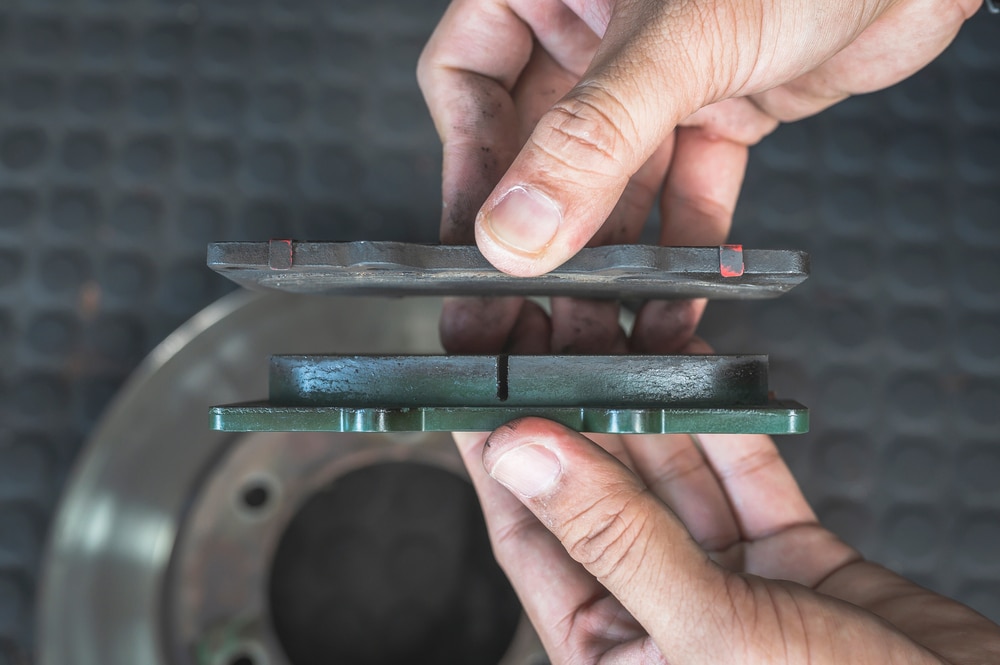
Worn brake pads compared to new brake pads
1. Air in the Brake Lines
Air is compressible. Brake fluid is not.
If air enters your brake lines, pressing the pedal compresses air bubbles instead of transferring full hydraulic force.
This creates a soft, spongy feeling.
Air can enter the system if:
- Brake fluid was recently changed incorrectly
- A brake component was replaced
- The fluid level dropped too low
- There is a small leak
A proper brake bleeding procedure removes trapped air and restores firm pedal feel.
2. Brake Fluid Leak
If your pedal feels soft and continues to sink toward the floor, you may have a leak.
Brake fluid leaks can occur at:
- Calipers
- Brake lines
- Flexible rubber hoses
- Master cylinder
- ABS module
Brake fluid leaks are serious because:
- You lose hydraulic pressure
- Stopping distance increases
- Complete brake failure becomes possible
If you notice fluid under your car or a dropping brake fluid reservoir level, the vehicle should be inspected immediately.
3. Old or Contaminated Brake Fluid
Brake fluid absorbs moisture over time.
In humid Virginia conditions, especially during hot Fredericksburg summers, brake fluid can degrade faster than many drivers realize.
Moisture in brake fluid:
- Lowers boiling point
- Causes internal corrosion
- Reduces hydraulic efficiency
- Contributes to spongy pedal feel
Most manufacturers recommend brake fluid replacement every 2–3 years.
If it has been longer than that, a brake fluid flush may restore proper pedal firmness.
4. Failing Master Cylinder
The master cylinder is the heart of your brake system.
If internal seals begin to fail, fluid can bypass internally instead of building pressure.
Symptoms include:
- Pedal slowly sinking while stopped
- Soft pedal even after bleeding
- Brake warning light in some cases
Master cylinder failure is less common than air or fluid issues — but when it happens, replacement is required.
5. Expanding Rubber Brake Hoses
As rubber brake hoses age, they can expand slightly under pressure.
This reduces how much force reaches the calipers and can create a softer pedal feel.
This is more common on:
- Older vehicles
- Trucks and SUVs
- Vehicles exposed to winter road chemicals
Replacement restores hydraulic integrity.
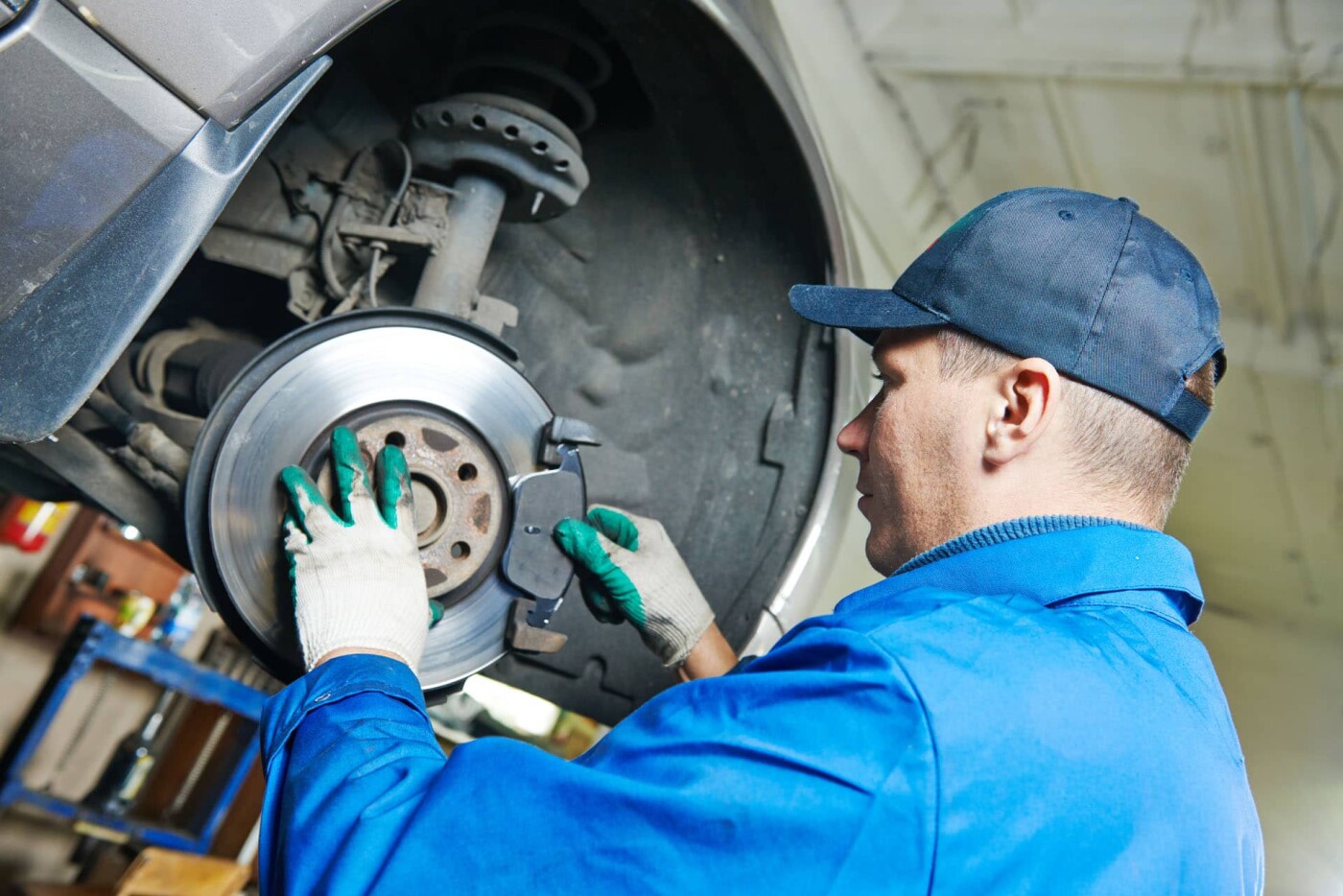
Professional brake system inspection at our shop.
Is It Safe to Drive With a Soft Brake Pedal in Fredericksburg?
A soft brake pedal increases:
- Stopping distance
- Emergency braking time
- Risk in wet conditions
- Risk in heavy I-95 traffic
Fredericksburg traffic patterns include:
- Sudden congestion
- High-speed merging
- Stop-and-go heat cycles
- Summer heat buildup
All of these stress the brake system.
If your pedal feels inconsistent, especially in traffic, that is not something to delay.
Can You Just "Pump the Brakes"?
Some drivers notice that pumping the pedal temporarily makes it firmer.
That can indicate:
- Air in the lines
- Minor internal seal wear
But pumping is not a fix.
It is a temporary compensation for lost pressure.
The root cause must be diagnosed.
What Does a Brake Inspection Include for a Soft Pedal?
A proper inspection includes:
- Brake fluid level and condition check
- Visual inspection for leaks
- Brake line and hose inspection
- Master cylinder pressure evaluation
- ABS system scan (if warning lights are present)
- Brake bleeding procedure if necessary
We do not guess.
We measure and inspect.
Hydraulic pressure must be consistent and firm before a vehicle leaves the shop.
Does a Soft Brake Pedal Affect Cars, Trucks, SUVs, and Hybrids?
Yes.
Soft brake pedals can affect:
- Domestic vehicles
- Import vehicles
- Trucks
- SUVs
- Hybrids
Hybrid vehicles still rely on hydraulic braking systems, even though regenerative braking assists under light braking.
If hydraulic pressure is compromised, stopping performance suffers.
When Is a Soft Brake Pedal an Emergency?
If the pedal feels slightly softer than normal, you may still have braking power — but reduced confidence.
If the pedal:
- Goes near the floor
- Continues sinking while stopped
- Feels inconsistent
It should be inspected immediately.
Brake systems are not an area to delay maintenance.
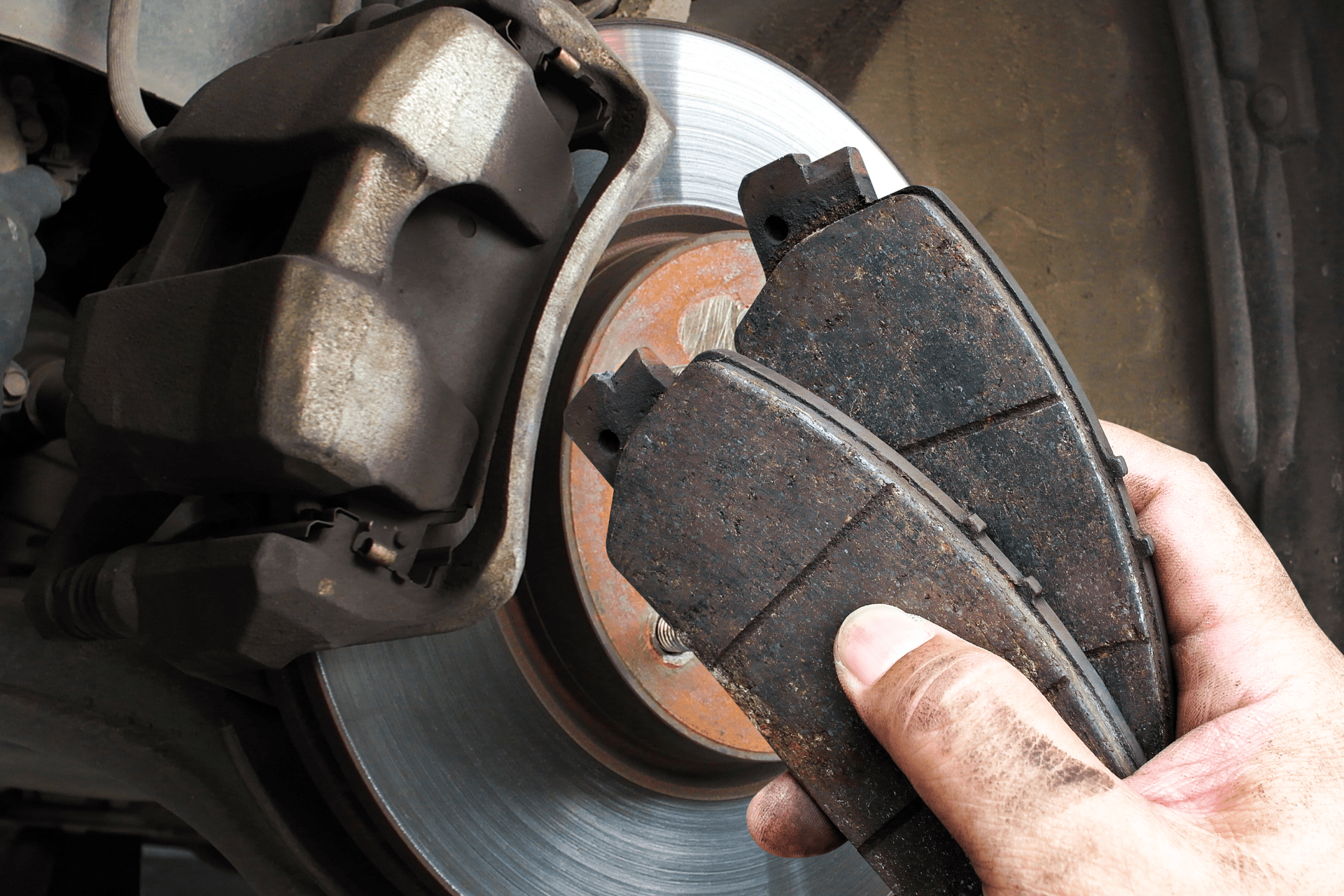
Brake rotor and caliper assembly during inspection.
How a Soft Brake Pedal Connects to Other Brake Problems
A soft pedal is different from:
- Squeaking brakes
- Grinding brakes
- Steering wheel vibration
But sometimes they overlap.
For example:
- Worn pads combined with air in lines
- Fluid leak plus rotor damage
- ABS issue plus vibration
Brake systems are interconnected.
That is why a full inspection matters.
When to Schedule Brake Repair in Fredericksburg, VA
If you notice a change in pedal feel while driving around:
- Route 1
- I-95
- Spotsylvania County
- Stafford County
It is better to have the system inspected early.
Small hydraulic issues can turn into major repairs if ignored.
If your brake pedal does not feel firm and responsive, schedule a brake inspection before the issue worsens. You can also check whether your vehicle is due for a Virginia State Inspection in Fredericksburg.
Related Brake Pedal Symptoms Drivers Search For
Many drivers describe a soft brake pedal in different ways.
You may have searched for:
- Brake pedal goes to floor
- Brake pedal sinks when stopped
- Brake pedal soft after bleeding
- Brake pedal soft after brake job
- Brake pedal low but brakes still work
- Brake pedal firm when pumped but soft again
- Brake pedal feels different after replacing pads
Although these phrases sound slightly different, they often point to the same root issue — a hydraulic pressure problem.
For example:
If your brake pedal goes to the floor, that may indicate:
- Severe fluid loss
- Major air intrusion
- Master cylinder internal bypass
If your brake pedal sinks while stopped at a red light in Fredericksburg traffic, that often suggests:
- Internal master cylinder leakage
- Slow pressure loss
- ABS hydraulic issue
If your brake pedal feels soft after a brake job, that may mean:
- Air was not fully removed during bleeding
- The ABS module was not cycled properly
- Rear drum brakes were not adjusted
- Brake fluid was contaminated
Even if your brakes still stop the vehicle, a pedal that feels different than normal is a warning sign.
Brake systems are designed to feel consistent.
When the feel changes, the system has changed.
When a Soft Pedal Is an Emergency
If your brake pedal suddenly:
- Drops rapidly
- Goes completely to the floor
- Requires pumping to stop
- Feels drastically different than yesterday
That can indicate rapid pressure loss.
Complete hydraulic failure is rare — but partial failure is not.
If you experience sudden pedal drop while driving on:
- I-95
- Route 1
- Any high-speed roadway near Fredericksburg
Reduce speed safely and have the vehicle inspected immediately.
Brake performance should never feel uncertain.
Soft Brake Pedal Repair Near Fredericksburg and Surrounding Areas
Four Mile Fork Garage proudly serves drivers throughout Fredericksburg and the surrounding communities.
If your brake pedal feels soft or spongy and you are located in:
- Stafford, VA
- Spotsylvania County
- Four Mile Fork
- Massaponax
- Falmouth
- Southern Gateway
- Thornburg
You do not need to drive far for a professional brake inspection.
Many of our customers commute daily along:
- Route 1
- I-95
- Route 3
- Courthouse Road
Heavy traffic and stop-and-go driving in these areas place additional stress on hydraulic brake systems.
Whether you are coming from North Stafford, Central Park Fredericksburg, or Spotsylvania Courthouse, our shop is conveniently located on Patriot Highway (Route 1) for easy access.
If your brake pedal does not feel firm and responsive, it is better to have it inspected close to home before the issue worsens.
Soft Brake Pedal in Fredericksburg? Here's What to Do Next
A soft or spongy brake pedal usually indicates a hydraulic issue — not worn pads alone.
It can involve:
- Air in the lines
- Brake fluid problems
- Leaks
- Master cylinder failure
The sooner it is diagnosed, the simpler and more affordable the repair typically is.
If your brake pedal does not feel firm and responsive, schedule a brake inspection before the issue worsens.
Our location at 10434 Patriot Hwy in Fredericksburg makes it easy for drivers traveling along Route 1 or exiting I-95 to stop in for a professional brake inspection. You can view our exact location on the embedded Google Map below for easy directions.