How Do I Know If I Need New Brake Pads?
If your brakes are squeaking, grinding, vibrating, or your vehicle takes longer to stop than it used to, you may need new brake pads. At Four Mile Fork Garage in Fredericksburg, VA, we inspect brake systems daily and help drivers determine when brake pad replacement is necessary before damage spreads to other components like rotors or calipers.
Why Brake Pads Wear Out
Every time you press the brake pedal, hydraulic pressure forces brake pads against spinning rotors to slow your vehicle. That friction generates heat and gradually wears down the pad material. Over time, the friction surface becomes thinner until it can no longer grip the rotor effectively.
The rate of wear depends on several factors including driving habits, vehicle weight, terrain, and the type of brake pad compound installed. Ceramic pads tend to last longer and produce less dust, while semi-metallic pads offer stronger stopping power but wear faster under heavy use.
Understanding why brake pads wear out helps you recognize the warning signs early — before minor wear becomes a costly brake repair in Fredericksburg or elsewhere.
Common Signs You Need New Brake Pads
Brake pad wear usually shows warning signs before complete failure. Pay attention to:
- Squeaking or squealing noise when braking
- Grinding sound (metal-on-metal contact)
- Vibration in the brake pedal
- Brake warning light on your dashboard
- Longer stopping distance
- Visible thin brake pads
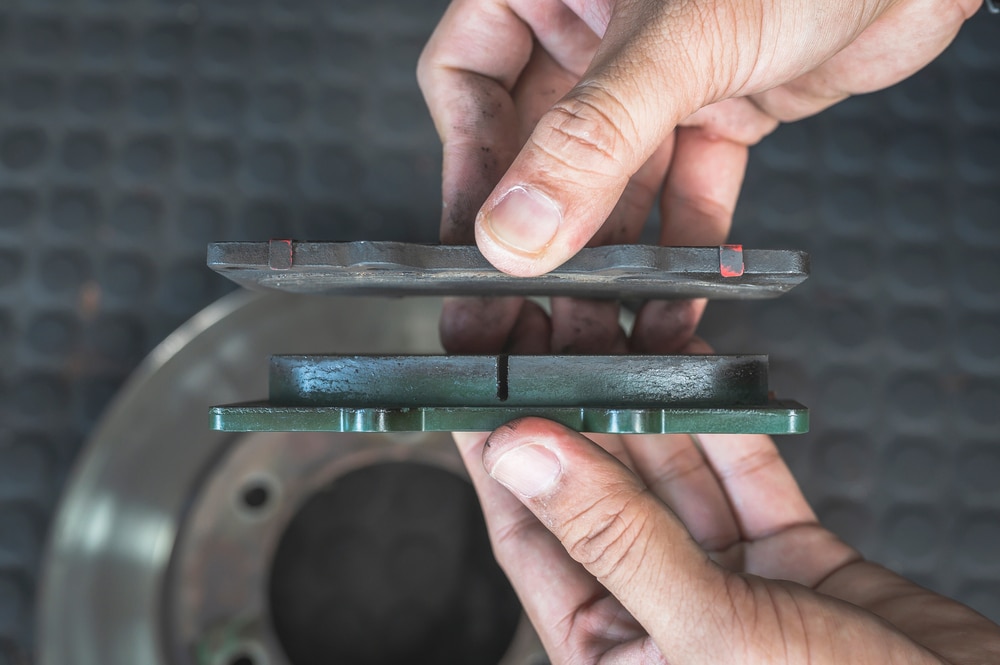
Worn brake pads (bottom) compared to new brake pads (top)
What Does Grinding Really Mean?
A grinding noise when braking is one of the most serious warning signs. It typically means the brake pad friction material has worn completely through, and the metal backing plate is now pressing directly against the rotor surface.
At this stage, every stop is actively damaging your rotors. What may have started as a simple brake pad replacement can quickly turn into a more expensive repair involving new rotors and possibly calipers. If you hear grinding in Fredericksburg, VA, don't wait — schedule a brake inspection immediately.
If you're hearing grinding now, read: Why Are My Brakes Grinding?
How Long Do Brake Pads Last?
Brake pad lifespan varies depending on driving habits, vehicle weight, traffic conditions, and terrain. On average, brake pads may last between 30,000 and 70,000 miles. Drivers in Fredericksburg often experience more stop-and-go traffic along Route 1 and I-95, which can shorten brake life compared to mostly highway driving.
Heavier vehicles like trucks and SUVs tend to wear through pads faster due to the additional weight the braking system must manage. Regular brake inspections help you stay ahead of wear and avoid unexpected failures.
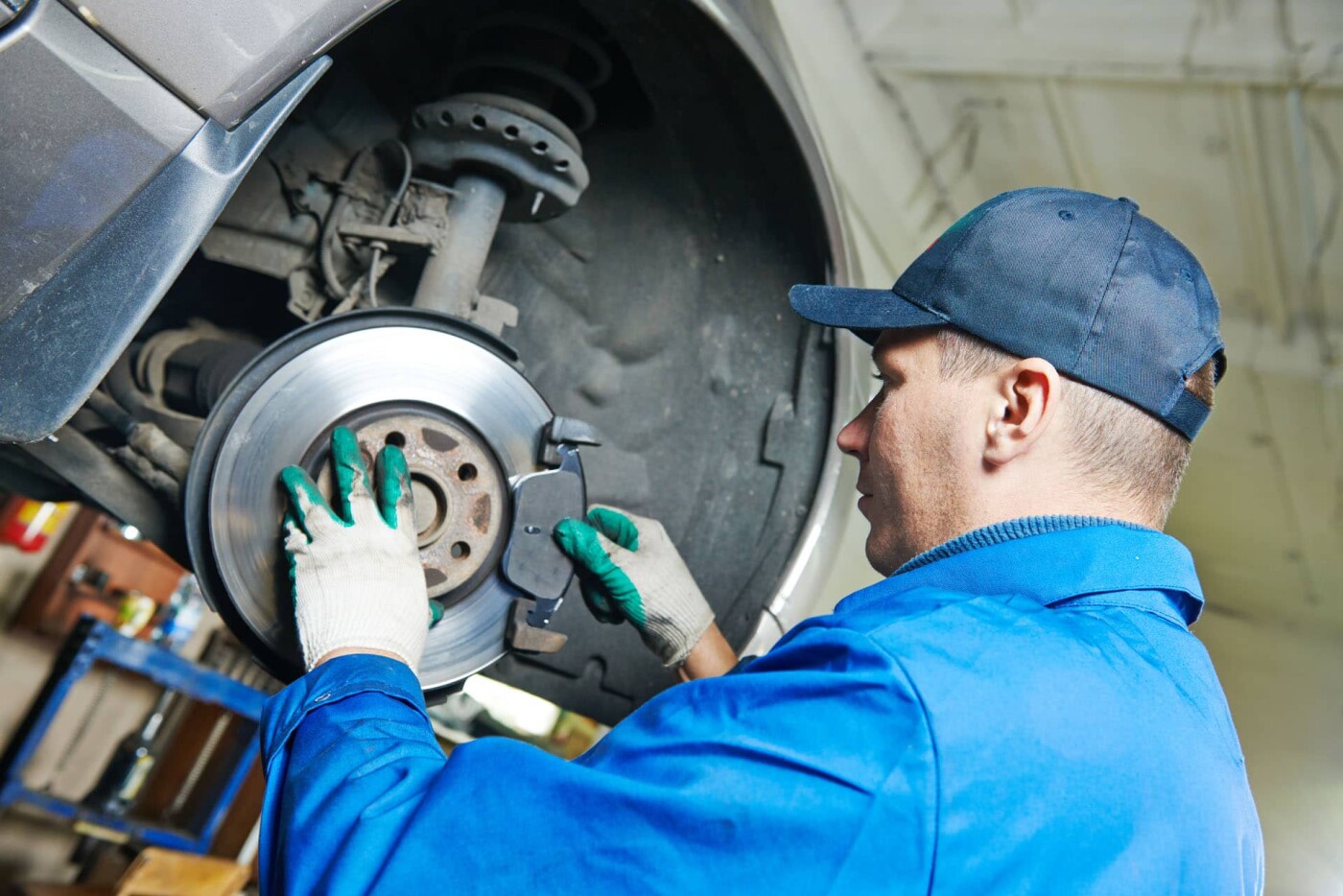
Professional brake pad installation in progress at our shop.
Can I Check My Brake Pads at Home?
On some vehicles, you can visually inspect brake pads through the wheel spokes without removing the tire. Look for the pad material pressed against the rotor — if it appears thinner than a pencil (roughly 3 millimeters), it's time for replacement.
However, not all vehicles allow easy visual access, and rear brake pads are often harder to see. A professional brake inspection in Fredericksburg gives you a complete picture of pad thickness, rotor condition, caliper function, and brake fluid level — things a visual check can't fully assess.
What Happens If You Ignore Worn Brake Pads?
Ignoring worn brake pads can result in rotor damage, reduced stopping power, increased repair costs, and potential safety risks. Once the pad material is gone, metal backing plates can score the rotor surface, creating deep grooves that make resurfacing impossible.
In severe cases, the caliper piston can over-extend and become damaged, and brake fluid may overheat — leading to a spongy pedal or complete brake fade. Replacing pads early is always less expensive than replacing pads, rotors, and calipers together.
Excessive heat from worn brake pads can also shorten rotor lifespan. Learn more about how heat cycles affect rotor durability in our guide: How Long Do Brake Rotors Last?
Do Front and Rear Brake Pads Wear the Same?
No. Front brake pads typically wear faster than rear pads because the front brakes handle the majority of stopping force — especially during hard braking when vehicle weight shifts forward. It's common to replace front pads once or even twice before the rear pads need attention. During a full brake inspection, we check both axles to provide a complete assessment.
Should You Replace Rotors When Replacing Brake Pads?
Not always. If rotors are within manufacturer thickness specifications and not warped or excessively scored, replacement may not be necessary. A proper brake inspection determines whether resurfacing or replacement is recommended. At Four Mile Fork Garage, we measure rotor thickness and runout before making any recommendation.
If you're unsure whether your rotors need replacement or resurfacing, read our detailed breakdown: Should You Replace Rotors When Replacing Brake Pads?
How Much Does Brake Pad Replacement Cost in Fredericksburg?
Brake pad replacement cost depends on vehicle type, front or rear brakes, and whether rotors also require replacement. Replacing pads early is typically less expensive than waiting until rotor damage occurs. We provide clear estimates before any work begins so there are no surprises.
Is It Safe to Drive With Worn Brake Pads?
Driving with severely worn brake pads is dangerous. Thin pads reduce your ability to stop quickly, increase stopping distance, and can lead to brake fade in emergency situations. If your brake warning light is on or you hear grinding, your vehicle needs immediate attention.
Even moderately worn pads can compromise braking performance in wet conditions or on steep hills — both common around the Fredericksburg, VA area. When in doubt, have your brakes inspected by a certified technician.
Brake Inspection in Fredericksburg, VA
If you're unsure whether your brake pads need replacement, our ASE Certified Technicians can inspect your brake system and provide a clear recommendation. Early brake inspection in Fredericksburg can prevent more expensive repairs and keep your vehicle safe on the road. We've been serving drivers since 1989 with honest assessments and quality brake repair.
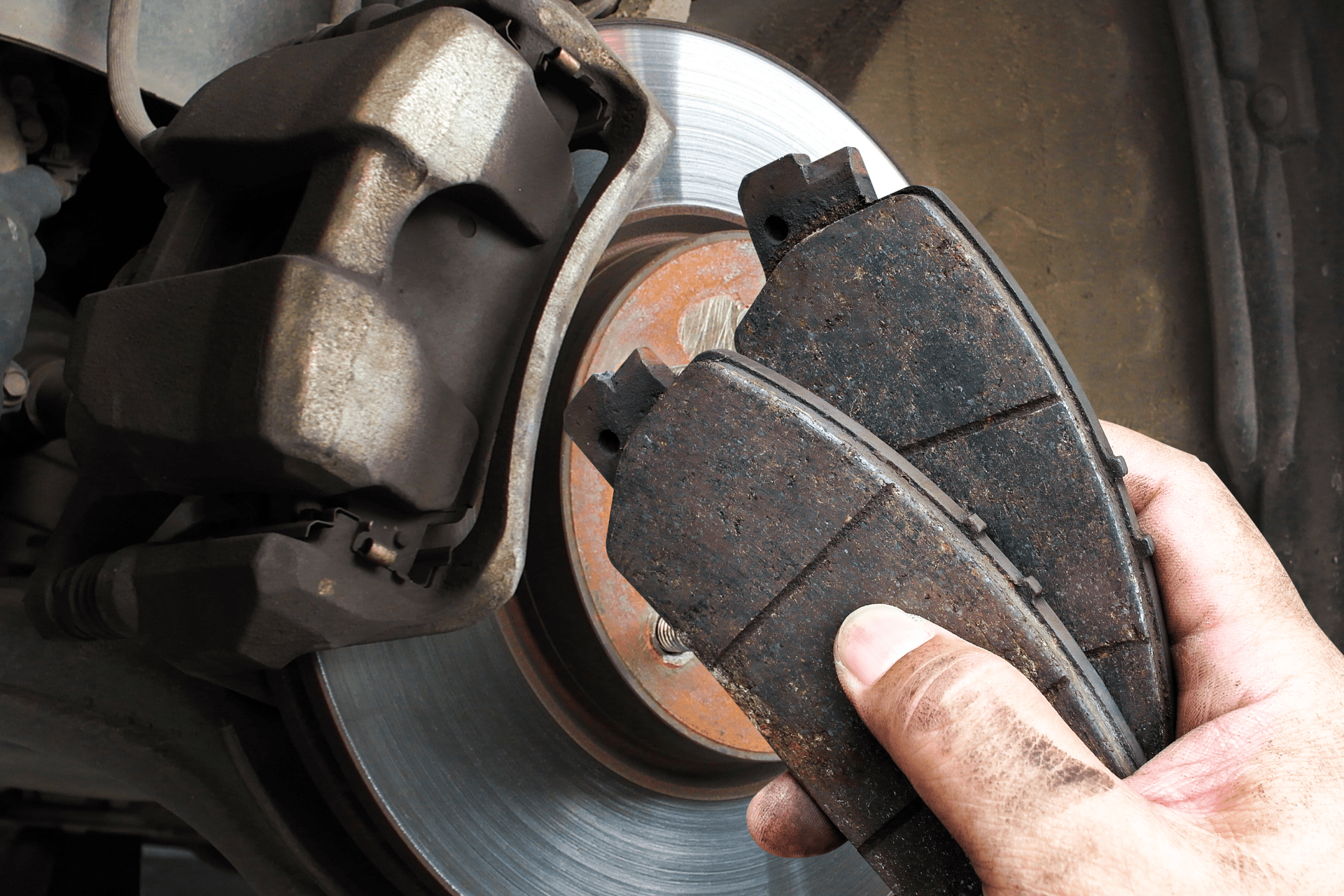
Brake rotor and caliper assembly during inspection.
Brake Pad Thickness — What the Numbers Actually Mean
Brake pad thickness is measured in millimeters. New brake pads typically start with 10–12mm of friction material. Most manufacturers recommend replacement at 3mm. Below 2mm, pads are considered critically worn.
At 3mm:
- Braking performance may still feel normal
- Wear indicator squeal often begins
- Replacement should be scheduled soon
At 2mm or less:
- Rotor damage risk increases
- Heat buildup becomes more severe
- Stopping distance may increase under heavy braking
Thickness is more reliable than mileage when determining replacement timing.
Why Brake Pads Sometimes Wear Unevenly
Brake pads should wear evenly across the surface. Uneven wear can indicate:
- Stuck caliper slide pins
- Seized caliper piston
- Bent caliper bracket
- Improper installation
- Rotor runout
Uneven wear often causes one pad to thin faster than the other, leading to vibration, noise, and reduced braking efficiency.
A professional inspection identifies not just pad wear — but why it occurred.
Brake Warning Lights — What They Really Indicate
Some vehicles include electronic brake wear sensors that trigger a dashboard warning light when pads reach a certain thickness.
However, a brake warning light can also indicate:
- Low brake fluid
- ABS system fault
- Hydraulic pressure imbalance
A warning light does not automatically mean you only need pads. Proper diagnosis ensures the real issue is addressed.
How Driving Conditions in Fredericksburg Affect Brake Pad Life
Local driving patterns directly impact brake wear.
- Stop-and-go traffic on Route 1
- Heavy congestion on I-95
- Frequent short trips
- Urban intersections
- High summer temperatures
All of these increase braking frequency and heat buildup.
Drivers who primarily drive highway miles at steady speeds often experience longer pad life compared to city commuters.
What Brake Fade Feels Like
Brake fade occurs when excessive heat reduces braking effectiveness. Symptoms include:
- Soft or spongy pedal feel
- Increased stopping distance
- Burning smell after heavy braking
- Reduced responsiveness
Brake fade is more common when pads are worn thin because thinner pads cannot dissipate heat as effectively.
Do Rear Brake Pads Wear as Fast as Front Pads?
Front brakes handle 60–70% of stopping force in most vehicles. Because of this, front pads typically wear faster than rear pads.
However, some modern vehicles with electronic brake distribution systems may experience more balanced wear.
During a brake inspection, both axles should always be evaluated.
How to Extend the Life of Your Brake Pads
Drivers can increase pad lifespan by:
- Avoiding hard, aggressive braking
- Anticipating traffic flow
- Replacing pads before metal-on-metal contact
- Maintaining proper tire pressure
- Scheduling annual brake inspections
Preventative maintenance reduces long-term brake system costs.
Final Answer — How Do You Know If You Need New Brake Pads?
You likely need new brake pads if you notice:
- Persistent squeaking
- Grinding noise
- Vibration while braking
- Brake warning light
- Longer stopping distance
- Pad thickness at or below 3mm
The safest decision is based on inspection and measurement — not guesswork.
At Four Mile Fork Garage in Fredericksburg, VA, we inspect your entire brake system and explain exactly what your vehicle needs before any work begins.
Virginia State Inspection Brake Requirements
In Virginia, your braking system must meet specific safety standards to pass the annual state inspection. Because brakes are one of the most important safety systems on your vehicle, inspectors evaluate more than just whether your car stops.
During a Virginia safety inspection, technicians check:
- Brake pad thickness (pads cannot be excessively worn)
- Rotor condition (no severe scoring, cracking, or unsafe thinning)
- Brake fluid leaks
- Proper caliper function
- Brake hose condition
- Parking brake operation
- Brake pedal reserve and feel
If brake pads are worn below safe thickness, your vehicle will not pass inspection until the issue is corrected. Severely damaged rotors or metal-on-metal grinding can also result in a failed inspection.
Many drivers in Fredericksburg are surprised to learn that waiting too long to replace worn brake pads can lead to additional repair costs and unexpected inspection failures — especially if rotor damage develops.
Scheduling a brake inspection before your annual state inspection helps prevent surprises and ensures your vehicle remains compliant and safe on the road.
If you're due for inspection, learn more about our Virginia State Inspection in Fredericksburg service.