Should You Replace Rotors When Replacing Brake Pads?
If you're replacing your brake pads, one of the most common questions drivers ask is: "Do I need to replace the rotors too?" The short answer is: not always.
The long answer depends on rotor thickness, surface condition, and how long the brake pads were worn before replacement. At Four Mile Fork Garage in Fredericksburg, VA, we inspect brake rotors carefully before recommending replacement. Our goal is simple — replace what is necessary, and avoid replacing what isn't.
What Do Brake Rotors Actually Do?
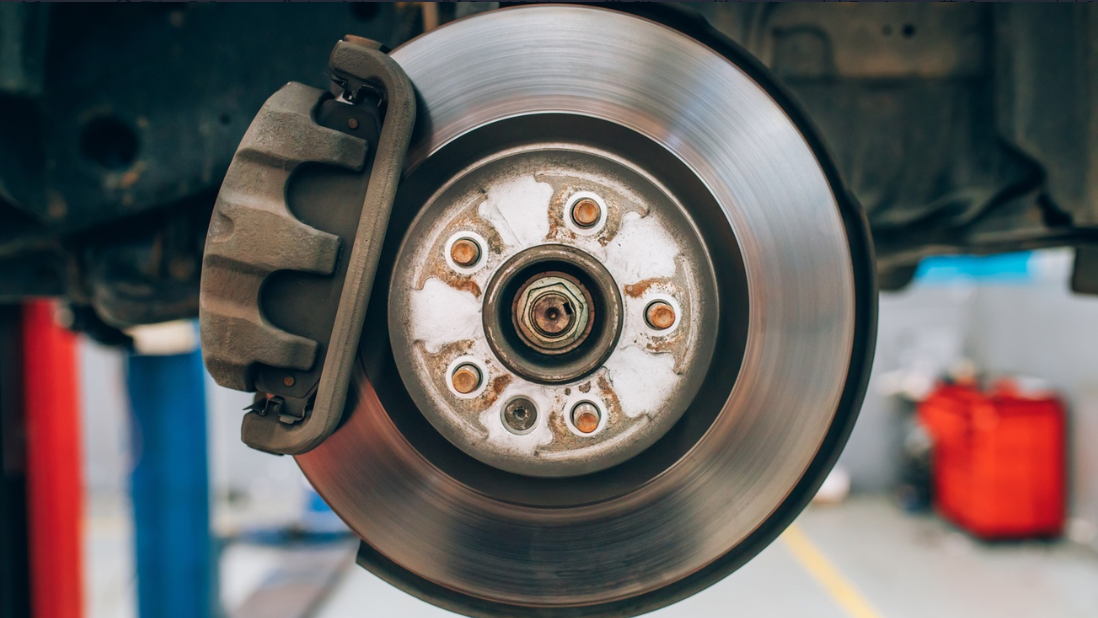
Brake rotors are the metal discs your brake pads press against to stop your vehicle. When you step on the brake pedal, hydraulic pressure forces the pads against the rotors, creating friction that slows the wheels. That friction creates heat. Over time, heat and pressure cause both pads and rotors to wear. Brake pads are designed to wear faster. Rotors wear more slowly — but they do wear.
When Do Rotors Need to Be Replaced?
Rotors should be replaced when they're below manufacturer minimum thickness, deeply scored, warped, heat-spotted, or damaged by metal-on-metal contact. Every rotor has a minimum thickness specification set by the manufacturer. If a rotor measures below that threshold, it cannot safely dissipate heat and should be replaced to maintain consistent braking performance.
At our Fredericksburg shop, we measure rotor thickness during every brake inspection before making recommendations. This prevents guessing and helps drivers avoid unnecessary replacements.
Minimum Thickness — Why It Matters
Rotors must be thick enough to handle heat. When rotors get too thin, they overheat faster and can warp more easily. Thin rotors also reduce braking consistency and can increase stopping distance during repeated stops, especially in stop-and-go traffic.
Fredericksburg traffic patterns — Route 1 lights, I-95 congestion, and daily commuting between Spotsylvania and Stafford — create frequent braking cycles that increase heat and wear over time. That's why thickness measurements matter more than mileage estimates.
Deep Scoring, Grooves, and Heat Spots
Rotors can be damaged even if they're still above minimum thickness. Deep grooves usually happen when brake pads are ignored for too long. Heat spots can form when brakes run hot repeatedly, and those heat spots can cause vibration or noise. If rotors are heavily scored or heat damaged, replacing pads alone often leads to poor results and shortened pad life.
What Does a Warped Rotor Feel Like?
Warped rotors usually cause a pulsing brake pedal or steering wheel vibration while braking. Many drivers describe it as "shaking when I hit the brakes," especially at higher speeds. Warping is often caused by excess heat, improper bedding, or thin rotors that can't dissipate heat effectively. The safest approach is inspection and measurement, not guessing.
If your steering wheel shakes while braking, read: Why Is My Steering Wheel Shaking When I Brake?
What Happens When Pads Are Worn Too Long?
If brake pads wear completely down, the metal backing plate contacts the rotor directly. This metal-on-metal contact can cut deep grooves into the rotor surface, generate excessive heat, reduce braking efficiency, and increase total repair cost. This is why replacing brake pads early is often the most affordable approach.
If you're unsure whether your pads are worn, read: How Do I Know If I Need New Brake Pads?
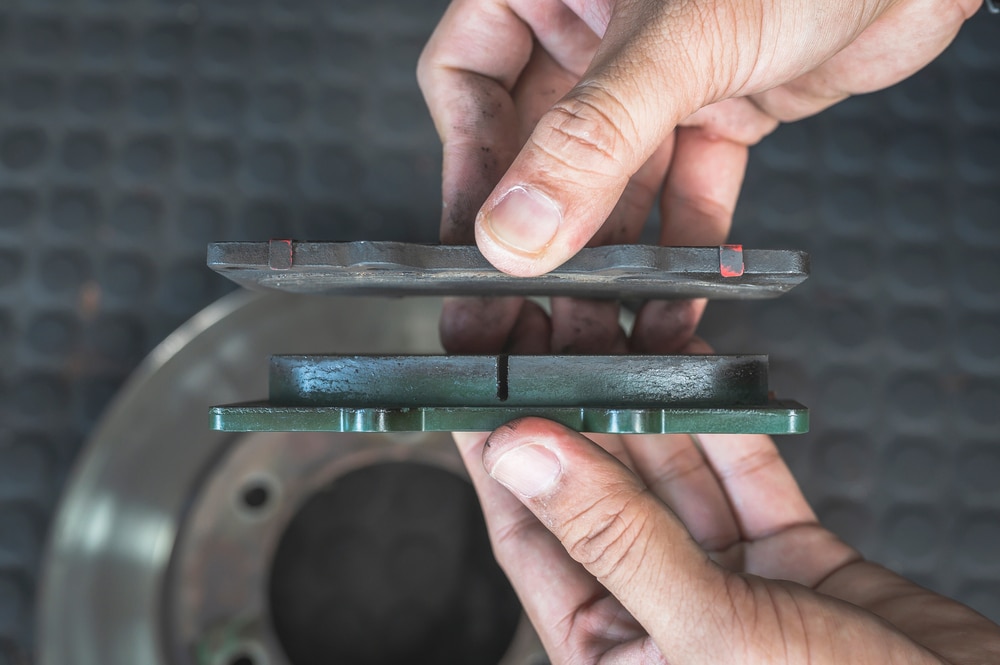
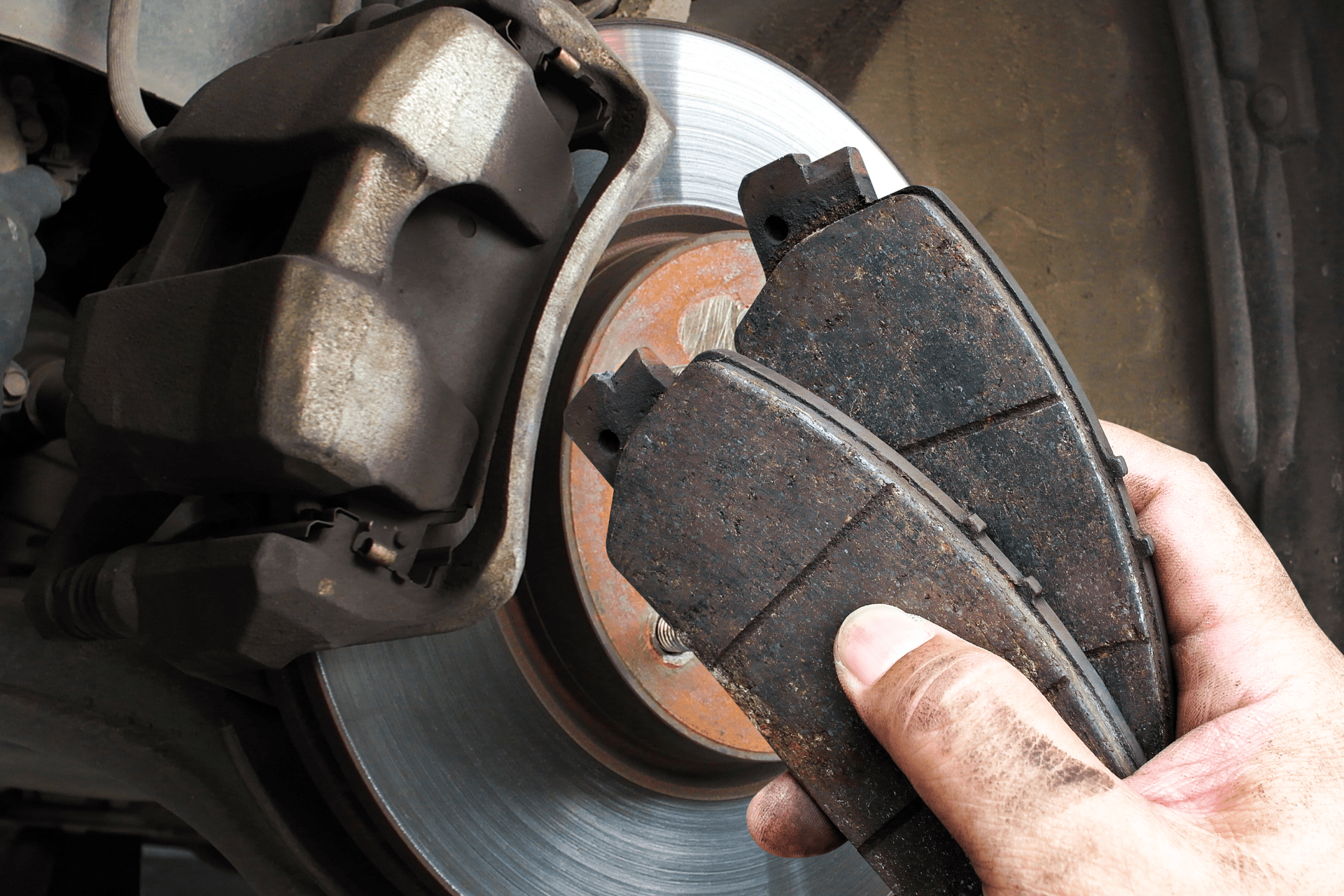
Worn brake pads (bottom) compared to new brake pads (top)
Do You Always Replace Rotors With Brake Pads?
No. There are three common scenarios:
Scenario 1 — Pads Only (Best Case)
Pads are worn but rotors are within specification and in good condition. In this case, pads can often be replaced without rotor replacement.
Scenario 2 — Pads + Rotors (Common Case)
Rotors are scored, warped, or below thickness specs. This often happens when squeaking or grinding is ignored.
Scenario 3 — Pads + Rotors + Caliper Issues (Worst Case)
Severe wear can overextend caliper pistons or cause hardware failure. This raises cost and is typically preventable with early inspection.
For cost expectations, see: How Much Does Brake Pad Replacement Cost in Fredericksburg, VA?
What Happens If You Don't Replace Damaged Rotors?
Damaged rotors can cause uneven braking, pulsation, increased stopping distance, and rapid wear of new pads. Even if a vehicle "stops," braking performance may be inconsistent — especially in rain or emergency situations.
How Rotor Thickness Is Measured During a Brake Inspection
During a professional brake inspection, rotor thickness is measured using a micrometer at multiple points around the rotor surface. Measuring in multiple locations helps detect uneven wear patterns and thickness variation.
Manufacturers stamp the minimum thickness specification directly on the rotor hat or list it in factory service manuals. If a rotor measures at or below that specification, replacement is required — even if the surface looks smooth.
We also check rotor runout (lateral wobble). Excessive runout can cause pedal pulsation even if the rotor is technically above minimum thickness.
Precision measurement prevents guesswork and ensures braking performance remains safe and consistent.
What Is Rotor Runout and Why Does It Matter?
Rotor runout refers to side-to-side movement of the rotor as it spins. Even a small amount of runout can create:
- Steering wheel vibration
- Uneven pad wear
- Pulsation under braking
- Premature rotor failure
Runout is measured using a dial indicator. If runout exceeds manufacturer tolerance, the rotor may need resurfacing or replacement.
Improper wheel torque is a common cause of rotor runout. Over-tightening or uneven tightening of lug nuts can distort the rotor hat and lead to vibration issues over time.
Do Driving Habits Affect Whether Rotors Need Replacement?
Yes. Driving style plays a major role in rotor life.
- Frequent hard braking
- Towing or hauling heavy loads
- Riding the brakes downhill
- Aggressive stop-and-go driving
- Heavy commuter traffic (common in Fredericksburg along Route 1 and I-95)
All of these increase heat buildup.
Heat is the primary factor that shortens rotor lifespan. The more heat cycles a rotor experiences, the more likely it is to warp, develop hot spots, or thin prematurely.
Drivers who anticipate stops and brake smoothly often extend rotor life significantly.
Why Many Modern Vehicles Replace Rotors More Often Than Older Cars
Older vehicles were built with thicker rotors that could be resurfaced multiple times.
Many modern vehicles use lighter-weight rotors to improve fuel efficiency. These rotors often start thinner and reach minimum thickness sooner.
Because of this, resurfacing is less common today than it was 15–20 years ago. In many cases, replacing rotors at the same time as pads provides better long-term results and avoids repeat labor costs.
What Happens If New Pads Are Installed on Damaged Rotors?
Installing new brake pads on worn or uneven rotors can lead to:
- Uneven pad break-in
- Increased noise
- Vibration
- Reduced braking efficiency
- Shortened pad lifespan
Brake pads need a smooth, even surface to bed in properly. If the rotor surface is heavily scored or heat damaged, the new pads cannot form an even contact pattern.
This often results in drivers returning with complaints shortly after a pad-only replacement.
Cost Comparison — Pads Only vs Pads and Rotors
Understanding cost differences helps drivers make informed decisions.
Pads Only:
- Lower immediate cost
- Works when rotors are within specification
Pads + Rotors:
- Higher upfront cost
- Prevents vibration issues
- Provides smoother braking
- Often reduces long-term repair frequency
Replacing rotors proactively when they are near minimum thickness can sometimes prevent paying for labor twice within a short time frame.
How to Extend the Life of Your Brake Rotors
Drivers can extend rotor life by:
- Replacing brake pads before they reach metal-on-metal
- Avoiding riding the brakes downhill
- Allowing proper bedding-in after brake service
- Ensuring wheels are torqued properly
- Scheduling annual brake inspections
Routine inspection is especially important for drivers in Fredericksburg who experience frequent braking in high-traffic areas.
Do All Vehicles Require Rotor Replacement at the Same Rate?
No. Rotor wear varies based on:
- Vehicle weight
- Brake system design
- Driving habits
- Terrain
- Traffic conditions
Heavier vehicles such as trucks and SUVs place more load on the braking system. Vehicles used for towing experience increased heat stress.
Drivers in dense traffic environments — like Fredericksburg commuters — may replace rotors more frequently than drivers who primarily travel highway miles.
There is no universal mileage rule for rotor replacement. Measurement determines necessity.
When Replacing Rotors Proactively Makes Financial Sense
Even if rotors are slightly above minimum thickness, replacement may be recommended when:
- Thickness is very close to specification
- Vehicle has high mileage
- Labor overlap makes combined replacement cost-efficient
- Driver plans long-term ownership
Replacing rotors while performing pad service can sometimes prevent needing to pay for labor again within a short time frame.
This is especially true if rotors are already approaching the end of their service life.
Rotor Thickness Variation — The Real Cause of Most "Warped Rotor" Complaints
Many drivers describe brake vibration as "warped rotors," but in real-world brake diagnostics, the issue is often rotor thickness variation rather than a rotor that is physically bent.
Thickness variation happens when the rotor surface develops subtle high and low spots. Even tiny differences can create:
- Brake pedal pulsation
- Steering wheel vibration
- Uneven pad wear
- Reduced braking consistency
Common causes include uneven pad deposits, repeated heat cycles, and runout. Once thickness variation develops, installing new pads on that rotor often leads to noise, vibration, and shortened pad life because the pads can't bed evenly.
That's why at Four Mile Fork Garage in Fredericksburg, we don't guess — we measure rotor thickness and evaluate surface condition before recommending pads only vs pads and rotors.
What Causes Rotor Thickness Variation?
Rotor thickness variation is usually caused by one of these conditions:
- Uneven pad transfer layer: pad material deposits unevenly on the rotor surface
- Heat spotting: overheating causes changes in metal properties in localized areas
- Rotor runout: wobble causes uneven contact under braking
- Improper installation: rust on the hub face or uneven lug torque creates distortion
The important point is this: vibration doesn't automatically mean "replace everything." It means the rotor surface isn't behaving consistently — and that can be confirmed with proper inspection.
Why Proper Wheel Torque Matters After Brake Service
Improper lug nut torque is one of the most overlooked reasons drivers develop brake vibration after a brake job.
When lug nuts are over-tightened or tightened unevenly:
- Rotor hat clamping force becomes uneven
- Rotor runout increases
- Thickness variation can develop sooner
- Vibrations become more likely at highway speeds
This is why wheels should be tightened in a star pattern using a calibrated torque wrench. Proper torque isn't just "nice to have" — it's part of protecting rotor life and keeping braking smooth.
Vented vs Solid Rotors — Why Some Rotors Fail Faster
Most vehicles use vented front rotors (with cooling vanes inside) because front brakes handle most stopping force and generate the most heat.
Rear rotors may be vented or solid depending on vehicle design.
In general:
Vented rotors:
- Cool better
- Handle repeated braking more consistently
- Resist fade more effectively
Solid rotors:
- Simpler design
- Often used in rear applications
- Can heat soak faster in stop-and-go traffic
Even with vented rotors, once thickness declines enough that cooling capacity drops, replacement becomes the safer option.
Rotor Metallurgy — What Heat Does to the Metal Over Time
Brake rotors are typically made from cast iron because it handles heat and friction well. But repeated heat cycles still change the rotor over time.
In Fredericksburg driving conditions — stop-and-go on Route 1, I-95 congestion, and frequent intersections — rotors experience repeated heating and cooling cycles that can lead to:
- Surface hardening (heat spots)
- Micro-cracking
- Thickness variation
- Reduced structural consistency
Once rotor structure is compromised, resurfacing may not fully restore safe braking performance. That's why rotors can sometimes "look okay" but still cause vibration, noise, or inconsistent braking under real-world conditions.
Brake Bedding — Why New Pads Sometimes Squeak After Replacement
Brake bedding is the controlled break-in process where a thin, even layer of pad material transfers onto the rotor surface. This is part of what makes braking smooth and consistent.
When bedding is done correctly:
- Noise is reduced
- Braking feels smoother
- Pad wear is more even
- Rotor wear slows
When bedding is not done correctly (or when rotors are uneven), pads may develop uneven deposits or hot spots — which can cause squeaking, vibration, and reduced braking performance.
This is also why installing new pads on damaged rotors often causes immediate complaints — the pads can't bed evenly on an uneven surface.
When Resurfacing Makes Sense — and When It Doesn't
Resurfacing (turning rotors) can be a good option when:
- The rotor is well above minimum thickness
- Surface scoring is light
- Heat damage is minimal
- There is no cracking
Resurfacing is usually NOT a good option when:
- The rotor is near minimum thickness
- Heat spots are severe
- Cracking is visible
- Thickness variation is significant
Many modern rotors start thinner than older designs, which means resurfacing may leave too little thickness to safely handle heat — especially for commuters driving in Fredericksburg traffic patterns.
Real-World Scenarios — Pads Only vs Pads and Rotors
Here's how this usually breaks down in real brake inspections:
Scenario A: Pads Only (Best Case)
Pads are worn, but rotors are:
- Above minimum thickness
- Smooth enough to bed properly
- Not heat damaged
- Not vibrating or pulsing
Scenario B: Pads + Rotors (Most Common)
Rotors show:
- Thickness near spec
- Scoring
- Heat spots
- Vibration/pulsation symptoms
- Runout beyond tolerance
Scenario C: Pads + Rotors + Hardware/Caliper Service
In addition to rotor issues, we may find:
- Seized slide pins
- Uneven pad wear
- Sticking calipers
- Hardware wear that causes noise
This is why inspection matters — not every "brake job" is the same.
How Virginia State Inspection Factors Into Rotor Condition
Virginia safety inspection includes brake component evaluation. If rotors are excessively scored, cracked, or unsafe due to thinning, a vehicle may fail inspection.
If you're due for inspection, it's smart to schedule a brake evaluation before your annual Virginia State Inspection in Fredericksburg.
Brake Rotor Replacement in Fredericksburg, VA
Drivers in Fredericksburg, Spotsylvania, and Stafford often deal with heavy braking cycles from commuting traffic and frequent stops. Those conditions can shorten rotor life compared to primarily highway driving.
If you're noticing:
- Vibration while braking
- Pulsation in the pedal
- Grinding or squealing
- Uneven braking feel
It's worth having your braking system inspected and measured.
If you need service, visit our Brake Repair in Fredericksburg page to learn more.
Final Answer — Should You Replace Rotors When Replacing Brake Pads?
There is no automatic rule that rotors must be replaced every time pads are changed.
Rotors should be replaced when:
- They measure below minimum thickness
- They show severe scoring
- They have excessive runout
- Heat damage is present
- The surface can't support proper pad bedding
If rotors are within specification and in good condition, pads only may be appropriate.
The safest decision is always based on inspection and measurement — not mileage estimates or assumptions.
At Four Mile Fork Garage in Fredericksburg, VA, we inspect and explain your options clearly so you can make the right decision for your vehicle and budget.